How to Track Your Menstrual Cycle
Without an App
By Journalyn · · 7 min read
TL;DR
- Track cycle day, flow intensity, energy, mood, and 1 to 2 physical symptoms daily.
- The four phases (menstrual, follicular, ovulatory, luteal) each have distinct energy and mood signatures.
- BBT and cervical mucus are the two signs that reliably identify the fertile window.
- Paper tracking is completely private. Period apps sell your data in most cases.
To track your menstrual cycle without an app, use a simple paper log: record cycle day, flow, energy, mood, and symptoms each day for 3 months, and you will have a reliable picture of your personal pattern.
Why track on paper instead of an app?
Period tracking apps have made cycle tracking mainstream, which is genuinely good. But most of them monetize your data. In 2023 and 2024, multiple major period apps were found to share user health data with advertisers or data brokers. Your menstrual data, fertility patterns, and cycle irregularities are among the most sensitive health data you generate.
Paper tracking keeps that data exactly where it belongs: on your desk. There is also evidence that active, intentional manual tracking builds stronger body literacy than passive tapping in an app.
What to track each day
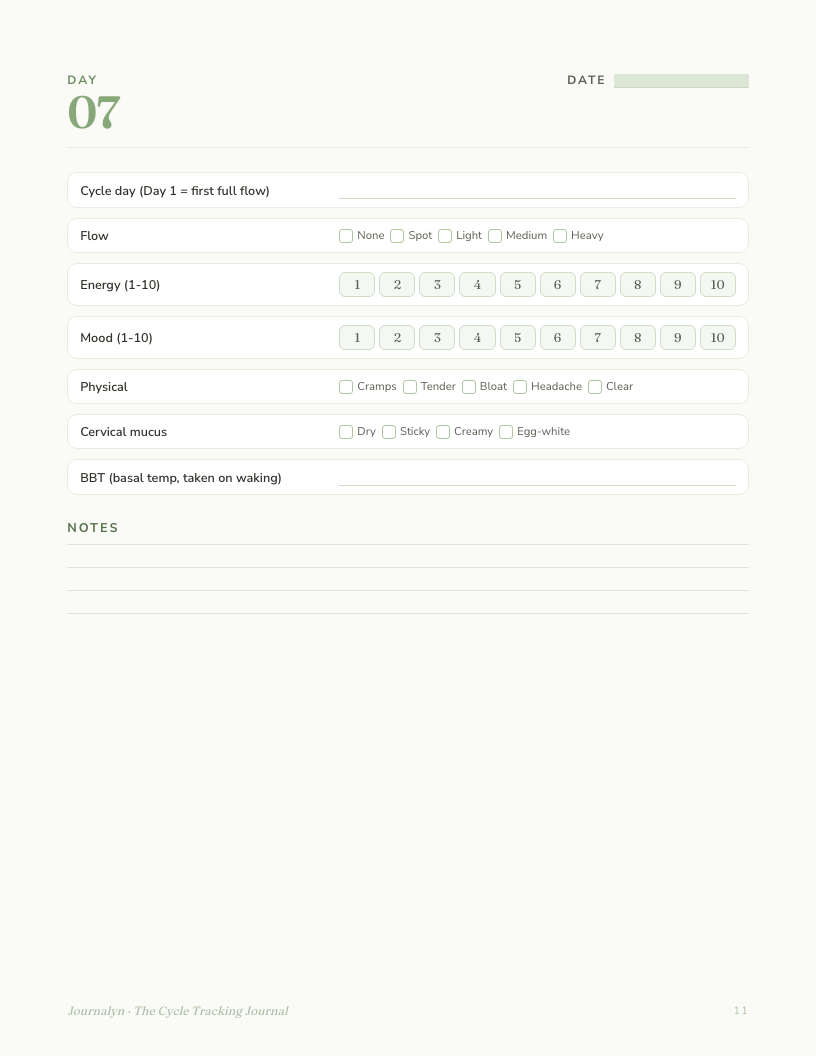
A good daily cycle log takes under 2 minutes. Start with these six fields:
- Cycle day. Day 1 is the first day of full flow. This is your reference point for identifying phases.
- Flow intensity. Light, medium, heavy, spotting, or none. Unusually heavy or long periods are worth discussing with your doctor.
- Energy level. A simple 1 to 10 rating. Over 3 months, the four-phase energy pattern will become visible.
- Mood. One or two words: calm, anxious, irritable, content, low, energized. The luteal phase pattern is often the most striking.
- Physical symptoms. Note cramps, breast tenderness, bloating, headache, skin changes, and anything else that recurs.
- Sleep quality. Poor sleep is one of the clearest luteal phase markers and is often dismissed as unrelated to the cycle.
The four phases and what to expect
Menstrual phase (days 1 to 5, on average)
Estrogen and progesterone are both low. Energy is typically reduced, introspection is natural. This is a good phase for rest and reflection rather than pushing hard. For many women, menstrual pain peaks on days 1 to 2.
Follicular phase (days 1 to 13, on average)
Estrogen rises steadily. Energy and mood typically improve from around day 5. Many women feel their sharpest and most motivated in the late follicular phase. Good time for new projects, challenging conversations, and creative work.
Ovulatory phase (days 12 to 16, on average)
Estrogen and testosterone both peak. This is often the highest-energy, most sociable, and most confident phase. It is also the fertile window. Cervical mucus becomes clear and stretchy (like raw egg white), and basal body temperature rises slightly after ovulation.
Luteal phase (days 15 to 28, on average)
Progesterone rises then falls sharply if there is no pregnancy. The drop in estrogen and progesterone in the late luteal phase drives PMS symptoms: irritability, low mood, bloating, breast tenderness, increased appetite, and disrupted sleep. For women with PMDD, these symptoms are significantly more severe.
Paper tracking vs. period apps
| Factor | Paper tracking | Period app |
|---|---|---|
| Data privacy | Stays on paper, fully private | Sold to data brokers in most cases |
| Setup cost | $14.99 once (printable log) | Free (you are the product) |
| Depth | As much detail as you want | Limited by the app's field structure |
| Doctor appointment | Bring the paper, easy to share | Awkward to share a phone screen |
| Body literacy | Active, intentional tracking | Passive, tap and forget |
Frequently asked questions
Why track your menstrual cycle?
Cycle tracking helps you identify patterns in your mood, energy, and physical symptoms across the four phases of your cycle. It can surface hormonal imbalances, support TTC (trying to conceive), give you data to discuss with a healthcare provider, and help you understand your body rather than being surprised by it month after month.
Is it better to track on paper or with an app?
Both have value. Paper tracking offers complete privacy (period apps sell anonymized data to advertisers in most cases), builds active body literacy (you notice what you are entering rather than just tapping), and produces a physical record you can bring to healthcare appointments. Apps offer convenience and automatic cycle predictions. Many women who track seriously use paper for the nuanced data and find apps too surface-level.
What should I track each day?
At minimum: cycle day (day 1 = first day of full flow), flow intensity (light, medium, heavy), and one note on how you feel. A more complete log adds: energy level (1 to 10), mood, key physical symptoms (cramps, breast tenderness, bloating, headache), sleep quality, and cervical mucus if using fertility awareness. The more you track, the more patterns you will find.
What are the four phases of the menstrual cycle?
The menstrual phase (days 1 to 5 on average): bleeding, lower energy, introspective. Follicular phase (days 1 to 13): estrogen rises, energy and motivation increase, best time for new projects. Ovulatory phase (days 12 to 16 on average): estrogen peaks, highest energy and social confidence, fertile window. Luteal phase (days 15 to 28 on average): progesterone rises then drops, PMS symptoms can appear, energy decreases. Cycle length varies; these are averages.
How do I track my fertile window?
The two most reliable physical signs of fertility are basal body temperature (BBT) and cervical mucus. BBT rises slightly after ovulation (by 0.2 degrees Celsius or more) and stays elevated. Cervical mucus becomes clear, stretchy, and slippery (like raw egg white) in the days before ovulation. Tracking both over 3 months gives you a reliable picture of your personal fertile window.
What is a printable cycle tracking journal?
A printable cycle tracking journal is a PDF you download and print at home. It typically includes a daily log for symptoms, mood, and energy across 3 months, a fertile window tracker, and a symptom summary page you can bring to a healthcare appointment. Unlike an app, it stores nothing and requires no account.
Written by the Journalyn team. We design printable journals for women. This article is for educational purposes only and is not medical advice. For clinical concerns about your cycle, please see a qualified healthcare provider.
Ready to start tracking?
Printable Cycle Tracking Journal
22 pages: 3-month daily symptom log, four-phase mood and energy map, fertile window tracker, PMS tracker, and a symptom summary for healthcare appointments. $14.99, instant PDF download. Completely private.
View the journal →Or see the Cycle Tracking Toolkit (4 PDFs, $27.99) which adds BBT charts, hormone support guide, and TTC planner.