Perimenopause Symptoms and Signs:
What to Expect
By Journalyn · · 9 min read
TL;DR
- Perimenopause typically begins in the mid-40s and lasts 4 to 8 years.
- 35+ symptoms across physical, cognitive, mood, and sleep domains.
- Anxiety and brain fog are among the most commonly missed symptoms.
- A 3-month symptom tracker dramatically improves healthcare conversations.
Perimenopause is the transitional phase before menopause: a multi-year hormonal shift that can cause 35+ symptoms across physical, cognitive, emotional, and sleep domains, beginning as early as the late 30s.
The most common perimenopause symptoms
Vasomotor symptoms (temperature regulation)
- Hot flashes (sudden waves of heat, often starting in the chest or face)
- Night sweats (hot flashes during sleep, often causing waking)
- Cold sweats
- Chills or temperature dysregulation between hot and cold
Hot flashes affect approximately 75 to 80% of women during perimenopause. They are caused by a narrowing of the thermoregulatory zone in the hypothalamus, driven by declining estrogen.
Menstrual changes
- Irregular cycle length (shorter, longer, or unpredictable)
- Heavier than usual periods (often among the first changes)
- Lighter than usual periods
- Missed periods
- Spotting between periods
Sleep disruption
- Difficulty falling asleep
- Waking between 2am and 4am (a common progesterone-related pattern)
- Waking due to night sweats
- Non-restorative sleep (waking tired despite hours in bed)
Mood and mental health
- New or worsened anxiety
- Low mood or persistent sadness
- Irritability and low frustration tolerance
- Mood swings
- Panic attacks in women with no previous anxiety history
- Emotional dysregulation (strong reactions to things that previously would not affect you)
Anxiety is one of the most commonly missed perimenopause symptoms because it is frequently attributed to life circumstances (work stress, family responsibilities) rather than hormonal changes. If you have developed significant anxiety in your 40s with no obvious cause, hormonal changes are worth discussing with your doctor.
Cognitive changes
- Brain fog (difficulty concentrating or thinking clearly)
- Word-finding difficulty
- Memory lapses (particularly working memory)
- Difficulty multitasking
Physical symptoms
- Joint pain and stiffness
- Muscle aches
- Vaginal dryness
- Decreased libido
- Breast tenderness
- Headaches or migraines (new onset or change in pattern)
- Dry skin and hair changes
- Weight gain, particularly around the abdomen
- Palpitations or irregular heartbeat (usually benign but worth checking)
- Bladder changes (urgency, frequency, or mild leaking)
Why tracking beats relying on memory
| Scenario | Describing from memory | Bringing a 3-month tracker |
|---|---|---|
| Hot flash frequency | "I get them a lot, I think" | "Average 4 per day, worst at 2pm and 2am" |
| Sleep disruption | "I don't sleep well" | "Waking 3 to 4 nights per week between 2 and 4am" |
| Mood pattern | "I've been quite low" | "Low mood most of days 18 to 28 of my cycle" |
| Doctor response | Often dismissed | Data prompts specific investigation |
Frequently asked questions
What age does perimenopause start?
Perimenopause typically begins in the mid-40s, but it can start as early as the late 30s. The average age of onset is 47, with wide variation. Menopause (the end point, defined as 12 consecutive months without a period) occurs at an average age of 51 in the UK and US. The perimenopause transition typically lasts 4 to 8 years.
What are the first signs of perimenopause?
The earliest and most common signs are: changes in menstrual cycle length or heaviness, new or worsening PMS, sleep disruption (especially waking between 2am and 4am), increased anxiety or low mood, and night sweats. Many women notice cycle changes first. Brain fog (difficulty with word-finding or concentration) is also commonly reported early.
How long do perimenopause symptoms last?
The perimenopause transition lasts an average of 4 to 8 years, but symptoms can continue after menopause (postmenopause). Hot flashes, for example, last an average of 7 years for women who experience them. Some women have minimal symptoms; others find the transition significantly disruptive. HRT (hormone replacement therapy) is the most effective medical treatment for moderate to severe symptoms.
Can perimenopause cause anxiety?
Yes. Anxiety is one of the most common but least-discussed perimenopause symptoms. Fluctuating estrogen affects serotonin and GABA levels, both of which regulate mood and anxiety. Women who have never had an anxiety disorder sometimes develop significant anxiety during perimenopause. It is often mistakenly attributed to life circumstances rather than hormonal changes.
How do you know if it's perimenopause or something else?
Many perimenopause symptoms overlap with thyroid disorders, iron deficiency anemia, depression, and sleep apnea. A symptom tracker that you bring to a healthcare appointment gives your doctor the data needed to distinguish between these. Blood tests (FSH, estradiol, thyroid panel, ferritin) are often useful, though FSH alone is not diagnostic of perimenopause since it fluctuates significantly.
What is the best way to track perimenopause symptoms?
A daily symptom log for at least 2 to 3 months is the most useful tool for identifying patterns and communicating with a healthcare provider. Track: which symptoms occur each day, their severity (1 to 10), sleep quality, mood, cycle day if still having periods, and anything that seems to help or worsen symptoms. A paper tracker is more reliable than memory for healthcare appointments.
Written by the Journalyn team. We design printable journals for women across life stages. This article is for educational purposes. It is not medical advice. Please consult a qualified healthcare provider for diagnosis and treatment of perimenopause symptoms.
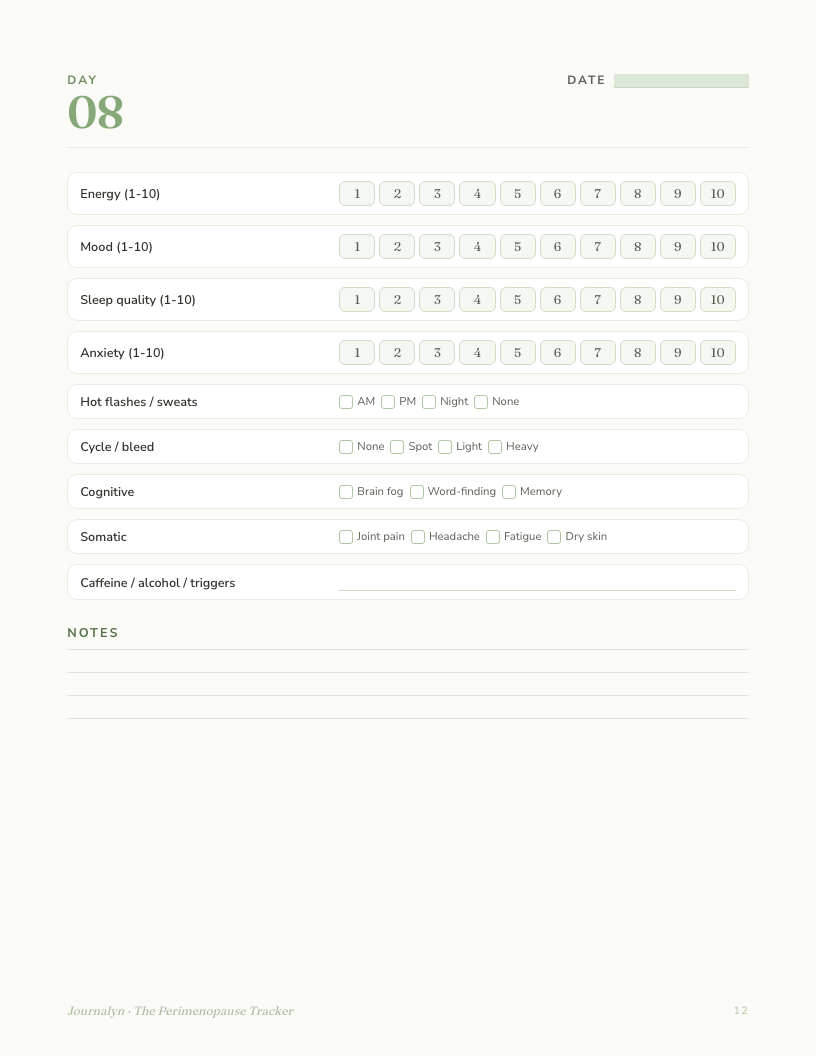
Track your symptoms
Perimenopause Symptom Tracker
23 pages: daily log for 30+ symptoms, cycle tracking, mood and energy ratings, sleep quality, and a monthly doctor-ready summary page. 3 months of data in one organized download. $14.99, instant PDF.
View the tracker →Or see the Perimenopause Toolkit (4 PDFs, $27.99) which adds a hormone journal, sleep log, and doctor-prep workbook.